DIY website builders are affordable and fast for simple sites and tight budgets, but limit customization, scalability, and SEO depth. Agencies cost more upfront but deliver tailored design, stronger performance, and expert support. Choose DIY for basic needs; choose an agency when your website drives revenue and growth.

Every business needs a website, but the path to getting one is rarely obvious. Should you build it yourself using a drag-and-drop platform, or should you hire a professional agency to do it for you? Both routes can produce a working website, yet they lead to very different outcomes in terms of cost, quality, and long-term value.
This decision matters more than it might seem. Your website is often the first impression a potential customer has of your business, and it quietly shapes whether they trust you enough to buy. In this guide, you will find an honest comparison of DIY website builders and hiring an agency, so you can choose the option that fits your goals, budget, and ambitions.
Understanding the Two Approaches
| Opcija | Cena | Trajanje izrade | Kada se isplati |
|---|---|---|---|
| DIY builder | 100-300 € godišnje | 1-2 nedelje | Budžet ispod 500 € |
| Freelancer | 500-2.000 € | 2-4 nedelje | Budžet 500-2.000 € |
| Agencija (osnovni sajt) | 2.000-5.000 € | 4-8 nedelja | Budžet preko 2.000 € |
| Agencija (napredni sajt) | 5.000-15.000 € | 8-16 nedelja | Budžet preko 5.000 € |
Before weighing the pros and cons, it helps to be clear about what each option actually involves.
DIY website builders are platforms like Wix, Squarespace, Shopify, and WordPress.com that let you build a site using pre-made templates and visual editors. You do the work yourself, usually for a monthly subscription. No coding is required, and you can launch within days.
Hiring an agency means partnering with a team of professionals who handle strategy, design, development, content, and sometimes marketing. You pay for their expertise and time, and they build a custom site around your specific business needs.
Neither approach is universally "better." The right choice depends on what you need your website to achieve.
The Case for DIY Website Builders
DIY builders have earned their popularity for good reasons, especially among smaller businesses just getting started.
Pros
- Lower upfront cost. Most builders charge a modest monthly fee, often between a few dollars and roughly fifty dollars per month. There is no large initial investment, which makes them attractive when budgets are tight.
- Speed to launch. With a template and some content ready, you can have a basic site live in a weekend. This is ideal when you need an online presence quickly.
- Full control. You can make edits whenever you want, without waiting on anyone or paying for every change.
- No technical expertise needed. The visual editors are designed for beginners, so you do not need to understand code or hosting.
Cons
- Limited customization. Templates constrain what you can do. As your needs grow, you may hit walls that the platform simply cannot work around.
- Generic design. Because thousands of businesses use the same templates, your site can look similar to competitors and fail to stand out.
- Weaker SEO and performance. Many builders produce bloated code and offer limited control over technical SEO, which can hold back your search rankings.
- Your time is the hidden cost. Building and maintaining a site yourself takes hours you could spend running your business. That time has real value.
- Scalability limits. If your business grows and you need advanced features, integrations, or automation, you may be forced to rebuild from scratch on a different platform.
DIY builders work well for solo entrepreneurs, local service businesses, and anyone who needs a simple, functional site without complex requirements.
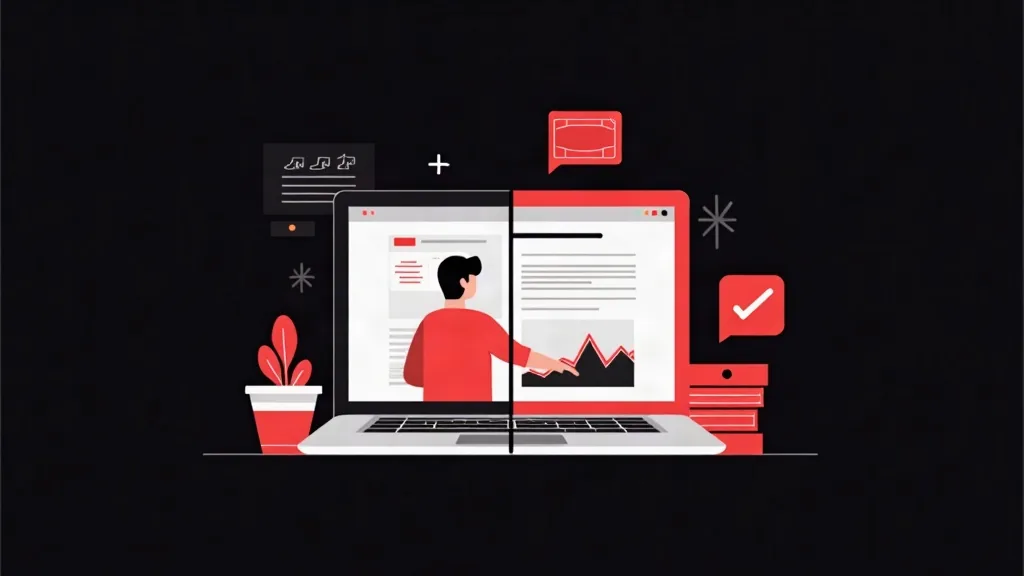
The Case for Hiring an Agency
When your website is a core part of how you attract and convert customers, professional help often pays for itself.
Pros
- Custom design and branding. An agency builds a site tailored to your brand, audience, and goals, helping you look credible and distinct in your market.
- Expertise across disciplines. You get access to designers, developers, SEO specialists, and strategists who each bring deep knowledge to the project.
- Better performance and SEO. Professionals optimize your site for speed, mobile devices, and search visibility, which directly affects how many customers find you.
- Scalability and integrations. Agencies build with growth in mind, connecting your site to tools for payments, bookings, CRM, email marketing, and automation.
- Ongoing support. A good agency provides maintenance, security updates, and advice, freeing you to focus on your business.
Cons
- Higher upfront cost. A professional site is a meaningful investment, often ranging from a few thousand dollars to much more depending on complexity.
- Longer timeline. Custom work takes time, usually several weeks to a few months from start to launch.
- Less day-to-day control. Depending on your agreement, small changes may require contacting the agency, though many provide easy-to-use content management systems.
- Choosing the right partner matters. Quality varies, so you need to vet agencies carefully to avoid disappointing results.
Hiring an agency makes sense when your website is central to revenue, when you need features a builder cannot support, or when a polished, trustworthy brand presence is critical to winning business.
Comparing the Real Costs
Many business owners focus only on the sticker price and conclude that DIY is cheaper. The full picture is more nuanced.
A DIY builder might cost you a few hundred dollars a year in subscriptions. But consider the time you spend learning the tool, designing pages, writing content, and fixing issues. If your website underperforms and fails to generate leads, the opportunity cost can far exceed what you saved.
An agency costs more at the outset, but a well-built website that ranks higher, loads faster, and converts more visitors can generate returns many times over. The right question is not "which is cheaper?" but "which delivers better value for my situation?"
A useful way to think about it: if your website is primarily an online brochure, DIY may be enough. If your website is a sales engine that drives a significant share of your revenue, professional investment usually wins.
How to Decide Which Is Right for You
Ask yourself a few honest questions to clarify the best path forward.
- What role does your website play? A simple informational presence leans toward DIY. A lead-generating or revenue-driving site leans toward an agency.
- What is your budget, including time? Factor in both money and the hours you can realistically dedicate.
- How important is standing out? If differentiation and credibility matter in your industry, custom design is worth it.
- What are your growth plans? If you expect to scale, adding features and integrations, start with a foundation that can grow with you.
- Do you have the skills and patience? Some owners enjoy building their own site; others find it frustrating and slow.
There is also a middle ground worth considering. Some businesses start with a DIY builder to validate their idea, then move to a professional build once they have traction and a clearer understanding of what they need. Others hire an agency to design and launch the site, then manage simple updates themselves through a user-friendly platform.
Conclusion
The choice between a DIY website builder and hiring an agency comes down to your goals, resources, and how much your website contributes to your success. DIY builders offer affordability, speed, and control, making them a sensible starting point for simple needs and tight budgets. Agencies offer expertise, custom design, and long-term value, making them the stronger choice when your website is a serious business asset.
Be honest about where your business stands today and where you want it to go. A website is not just an expense; it is an investment in how the world sees and interacts with your brand. Choose the approach that helps you make the strongest possible impression and supports the growth you are aiming for.
If you are unsure which path fits your business, a quick conversation with a professional team can help you weigh the options clearly. Beeglantee works with businesses worldwide to design and build websites that look great, perform well, and deliver real results.