DIY website builders cost less upfront (often $100-$600/year) but demand your time and skills. Agencies charge more ($3,000-$30,000+) but deliver strategy, custom design, and long-term value. The right choice depends on your budget, timeline, and how much the website matters to your revenue.
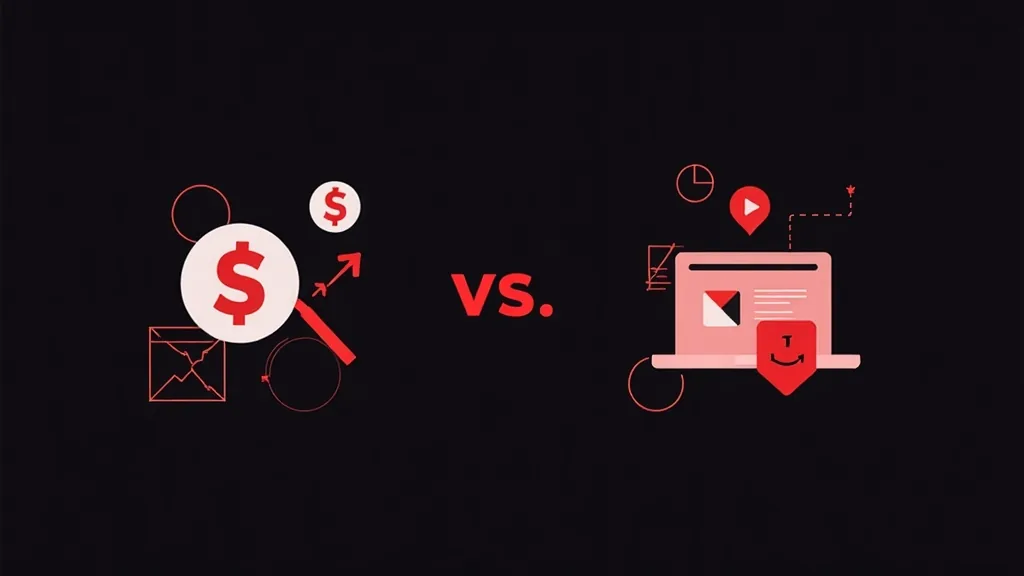
Building a website in 2026 is easier than ever, and also more confusing than ever. You can spin up a page in an afternoon with a drag-and-drop builder, or you can hire an agency to craft a custom platform that drives real revenue. The difference in price between these two paths can be staggering, and the cheapest option is not always the most affordable in the long run.
If you are a business owner weighing your choices, this DIY vs agency website building costs comparison will give you a clear, honest picture of what each route actually costs, what you get for your money, and how to decide which one fits your goals this year.
The Real Cost of the DIY Route
The appeal of do-it-yourself website building is obvious: low upfront cost and full control. Platforms like Wix, Squarespace, Shopify, and WordPress with page builders have matured significantly, and in 2026 many of them include AI-assisted design tools that generate layouts and copy for you.
Here is what a typical DIY budget looks like over one year:
- Domain name: $10-$20 per year
- Website builder subscription: $16-$50 per month ($192-$600 per year)
- Premium theme or template: $0-$120 one-time
- Apps and plugins: $0-$400 per year (forms, bookings, SEO tools, email capture)
- Stock images or icons: $0-$150
That puts a realistic DIY total somewhere between $200 and $1,200 in your first year, with recurring costs of roughly $200-$700 annually after that.
But money is only half the equation. The hidden cost of DIY is your time. Learning a platform, designing pages, writing content, optimizing for mobile, and troubleshooting technical issues can easily consume 40 to 100 hours. If your time is worth $50 an hour to your business, that is $2,000 to $5,000 of your own labor that never shows up on an invoice.
DIY works best when your website is a simple online presence rather than a core sales engine. A local service provider who needs a clean five-page site to look credible can do very well on their own. A growing e-commerce brand that lives and dies by conversion rates usually cannot.
What an Agency Actually Charges
Agency pricing varies widely because "agency" covers everything from a solo freelancer to a full team of strategists, designers, and developers. In 2026, here is a general range you can expect worldwide:
- Freelancer or small studio: $1,500-$6,000 for a standard business site
- Mid-sized agency: $6,000-$20,000 for a custom, strategy-led website
- Full-service agency for complex builds: $20,000-$75,000+ for e-commerce, web apps, or multi-language platforms
Ongoing costs also apply. Many agencies offer maintenance and support retainers ranging from $100 to $2,000 per month, depending on how much they manage for you (hosting, security, updates, content changes, and performance monitoring).
At first glance, these numbers can feel intimidating compared to a $30-a-month builder. But the comparison is not apples to apples. When you hire an agency, you are not just paying for a website. You are paying for research, brand strategy, custom design, professional copywriting, technical performance, accessibility compliance, SEO foundations, and someone accountable for the results.
Comparing the Two Side by Side
To make this DIY vs agency website building costs comparison practical, it helps to look beyond the sticker price and consider the full value you receive.
Upfront cost: DIY wins clearly. You can launch for a few hundred dollars, while agencies require a meaningful investment.
Time investment: Agencies win. They handle the heavy lifting so you can focus on running your business. DIY demands weeks of your attention.
Design quality: Agencies typically produce more polished, on-brand, and conversion-focused designs. DIY templates look good but can feel generic, and many competitors use the same ones.
Customization and scalability: Agencies build with your future in mind. DIY platforms can hit ceilings when you need advanced features, integrations, or heavy traffic.
SEO and performance: Agencies bake in technical SEO, fast load times, and clean code. DIY sites can rank well but often need extra plugins and manual tuning to compete.
Ongoing control: DIY gives you direct, immediate control over edits. With an agency, you either learn their content management system or rely on them for changes.
Risk and accountability: With an agency, someone is responsible if something breaks or underperforms. With DIY, that someone is you.
The honest conclusion is that neither option is universally better. They serve different needs and different stages of business growth.
The Hidden Costs Most Businesses Overlook
Both paths carry expenses that rarely appear in a first estimate. Understanding these will protect you from unpleasant surprises.
On the DIY side, watch for subscription creep. That $16 plan often lacks the features you actually need, so you upgrade to a higher tier, then add paid apps for booking, email marketing, and analytics. A site that looked like $200 a year can quietly become $900. There is also the cost of lost opportunity: a slow, poorly optimized DIY site may cost you customers you never knew you had.
On the agency side, scope changes are the usual culprit. If you ask for extra pages, new features, or major revisions mid-project, the price rises. Content is another common gap. Some agencies assume you will supply photos and text, which can stall the project or lead to added copywriting fees. Always confirm what is included before you sign.
For both routes, remember recurring essentials: hosting, security certificates, backups, and periodic redesigns. Websites are not a one-time purchase; they are a living asset that needs upkeep to stay competitive.
How to Choose the Right Path for Your Business
Instead of asking "which is cheaper," ask "which delivers the best return for my situation." These questions will guide you.
How central is your website to revenue? If your site is your primary storefront or lead generator, an agency investment usually pays for itself. If it is a simple digital business card, DIY may be plenty.
What is your realistic timeline? DIY can go live quickly if you have time to build it. Agencies take longer to plan and produce but require far less of your involvement.
Do you have the skills and patience? Be honest. If technical tools frustrate you, the money you save on DIY may cost you in stress and half-finished pages.
What is your growth trajectory? If you plan to scale, add products, expand internationally, or integrate complex systems, building on a solid, custom foundation now saves expensive rebuilds later.
What is your total budget over three years, not just launch day? Spread the cost across the lifespan of the site. An agency site that lasts five years and drives consistent leads can be cheaper per year than a DIY site you rebuild twice.
A growing number of businesses in 2026 choose a hybrid approach: an agency designs and builds the foundation, then hands over an easy-to-manage system so you can handle day-to-day content yourself. This blends professional quality with ongoing affordability and is often the smartest middle ground.
Conclusion
There is no single winner in the DIY vs agency website building costs comparison. DIY offers the lowest entry price and full independence, making it ideal for simple sites and tight budgets, as long as you have the time and willingness to learn. An agency costs more upfront but delivers strategy, custom design, technical strength, and accountability, which matters most when your website directly drives your income.
The key is to look past the initial price tag and evaluate the total cost of ownership, the value of your own time, and the role your website plays in your growth. Choose the option that supports your business goals, not just the one that looks cheapest today.
If you are unsure which route fits your budget and ambitions, that is exactly the kind of question worth talking through with a professional. At Beeglantee, we help business owners weigh these trade-offs honestly and build websites that earn their keep, whatever the starting budget.