Google Ads delivers leads within days but stops the moment you stop paying. SEO takes months to mature but compounds into a low-cost, durable source of revenue. Service businesses usually win by starting with Ads for immediate cash flow while building SEO in parallel for long-term returns.
If you run a service business, you need leads that turn into paying customers, and you need them without wasting budget on channels that take forever to pay off. Two options dominate the conversation: Google Ads and search engine optimization (SEO). Both put you in front of people actively searching for what you offer. The difference is how quickly each one turns into actual revenue.
This comparison cuts through the theory and focuses on what matters most to you as an owner or decision-maker: how fast money starts flowing in, what it costs along the way, and how to use both channels so you are not left choosing between quick wins and lasting growth.
How Fast Each Channel Produces Revenue
| Opcija | Prosečna cena | Trajnost | Kada se isplati |
|---|---|---|---|
| Google Ads | 300-800 €/mesec | Dok plaćaš | 1-7 dana |
| SEO | 400-1000 €/mesec | 12+ meseci | 4-6 meseci |
| Kombinacija | 700-1500 €/mesec | 12+ meseci | 2-3 meseca |
The single biggest difference between Google Ads and SEO is time to first revenue.
Google Ads is close to instant. Once your campaign is approved, your ads can appear at the top of search results within hours. A plumber, law firm, or HVAC company can launch a campaign in the morning and field its first qualified call that afternoon. If your offer, landing page, and targeting are sound, you can generate booked appointments in the first week. This makes Ads the fastest reliable path to revenue available to a service business.
SEO is a slow build. Ranking organically for valuable search terms typically takes three to six months, and competitive markets can take longer. Search engines need time to crawl your pages, assess their quality, and build trust in your domain. You will not see meaningful lead volume on day one, or even in month one. But once you rank, the traffic arrives without a per-click cost.
Think of it this way: Google Ads is like renting a storefront on the busiest street in town. The moment you stop paying rent, you lose the location. SEO is like buying property in a neighborhood that is steadily becoming popular. It takes time and effort to develop, but eventually you own an asset that keeps producing.
Comparing the True Cost of Each Channel
Speed is only half the equation. What you pay to acquire each customer determines whether a channel is actually profitable.
Google Ads cost structure
With Ads you pay for every click, whether or not it converts. In many service categories, clicks for high-intent terms are expensive, sometimes reaching tens of dollars for a single visitor. Your cost per acquisition depends on:
- The competitiveness of your keywords
- Your conversion rate from click to lead to sale
- The quality of your landing pages
- How tightly you control wasted spend
The advantage is predictability and control. You can set a daily budget, measure exactly what each lead costs, and scale up or down instantly. The disadvantage is that costs never disappear. The moment you pause the campaign, the leads stop.
SEO cost structure
SEO requires upfront investment in content, technical improvements, and authority building, but it carries no per-click fee. Over time, the cost per lead tends to drop dramatically because you are not paying for each visitor. A page that ranks well can generate leads for years with only occasional maintenance.
The tradeoff is patience and uncertainty. You invest money and effort for months before seeing a clear return, and rankings can shift as competitors improve or search algorithms change. SEO rewards consistency, not short bursts.
Lead Quality and Buyer Intent
Both channels target people who are searching, which means both tend to produce higher-intent leads than social media or display advertising. There are subtle differences worth understanding.
Google Ads lets you capture the highest-intent moments. You can bid specifically on terms like "emergency electrician near me" or "commercial cleaning quote," reaching people ready to buy right now. You also control the message and the landing page, which lets you match the offer precisely to the search.
SEO builds trust and captures a wider funnel. Organic results carry credibility because many searchers trust them more than paid ads. SEO also lets you capture people earlier in their decision, through informative content that answers questions before they are ready to hire. That builds familiarity, so when they are ready to buy, your business is already top of mind.
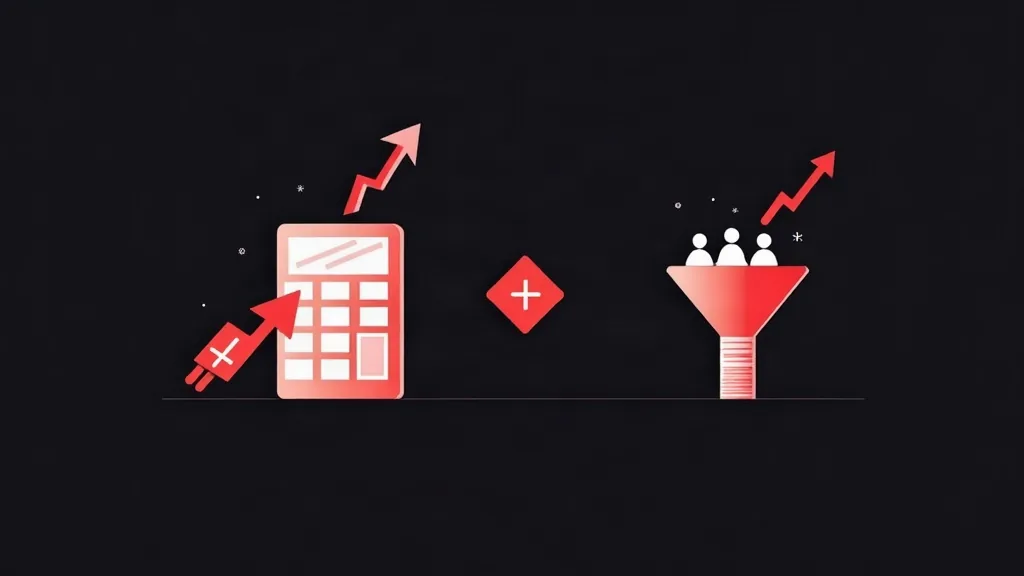
For most service businesses, the strongest results come from pairing the immediate intent capture of Ads with the trust and reach of organic search.
Which One Should You Start With?
The honest answer depends on your situation, but here is a practical framework.
Start with Google Ads if:
- You need revenue now to stabilize cash flow
- You are launching a new location or service and have no organic presence
- You want to test which services and messages convert before investing in content
- You have the margin to absorb per-click costs profitably
Ads give you fast feedback. Within weeks you learn which keywords drive calls, what customers are worth, and which offers resonate. That data is valuable even for your long-term strategy.
Prioritize SEO if:
- You have a runway of several months and want to lower acquisition costs over time
- You operate in a market where buyers research extensively before hiring
- You want to build a durable asset that keeps producing without ongoing ad spend
- Your competitors are weak organically, giving you a window to rank
In most cases, the real winner is not choosing one. It is sequencing them intelligently.
The Smartest Strategy: Run Both Together
Treating Google Ads and SEO as rivals is a mistake. They work best as partners, each covering the other's weakness.
Here is how a service business can combine them:
Launch Google Ads immediately to generate leads and revenue from day one. This funds your business while the slower channel develops.
Use Ads data to guide your SEO. The keywords that convert best in your campaigns are exactly the terms you should target with organic content and landing pages. You are letting paid data de-risk your SEO investment.
Build SEO in parallel so that over three to six months your organic rankings start producing leads at a fraction of the cost.
Gradually shift budget as SEO matures. As organic traffic grows, you can reduce ad spend on terms you now rank for, or reinvest that budget into more competitive keywords and new markets.
Keep Ads for high-value, time-sensitive terms. Even with strong SEO, Ads remain useful for the most competitive, highest-intent searches where owning the top spot is worth paying for.
This combination gives you the best of both worlds: the speed to revenue of Ads and the compounding, low-cost returns of SEO. Over a full year, businesses that run both typically achieve a lower blended cost per acquisition than those relying on a single channel, while also protecting themselves against the risk of any one channel underperforming.
Measuring Success the Right Way
Whichever path you choose, track the metrics that connect directly to revenue, not vanity numbers. For both channels, focus on:
- Cost per acquisition: what you spend to win one paying customer
- Conversion rate: how many clicks or visitors become booked jobs
- Customer lifetime value: the total revenue a customer generates, which justifies higher acquisition costs
- Return on investment: revenue produced relative to what you spent
For Ads, expect clear numbers quickly. For SEO, be patient and measure trends over quarters rather than weeks. A rising volume of organic leads at a falling cost is the sign your investment is paying off.
Conclusion
When it comes to speed to revenue, Google Ads is the clear fast lane. It delivers leads and sales within days, which is why it is often the right first move for service businesses that need cash flow and market feedback immediately. SEO, by contrast, is a longer road that rewards patience with a durable, low-cost source of revenue that compounds over time.
The businesses that grow most reliably do not force a choice. They launch Ads for immediate results, use the data to sharpen their SEO, and build organic rankings that steadily reduce their dependence on paid traffic. The result is a marketing engine that produces revenue now and keeps producing it at a lower cost later.
If you want help building a strategy that balances quick wins with lasting growth, our team can design and manage both channels so your service business sees revenue sooner and spends smarter over the long run.