Service businesses convert visitors into clients by building trust, clarifying their offer, and removing friction. Focus on strong calls to action, social proof, fast-loading pages, simple contact forms, and clear value messaging. Test continuously and prioritize mobile users to steadily improve lead quality and volume.

If you run a service business, your website has one core job: turn interested visitors into qualified leads and paying clients. Yet many service websites attract traffic and still generate very few inquiries. The problem is rarely the amount of traffic — it is what happens once visitors arrive.
Conversion rate optimization (CRO) is the practice of improving your website so that a larger percentage of visitors take the action you want, whether that is booking a call, filling out a form, or requesting a quote. For service businesses, small improvements in conversion rate can dramatically increase revenue without spending a single extra dollar on advertising.
In this guide, you will learn practical, proven website conversion rate optimization strategies built specifically for service businesses. These are the tactics we use with clients to turn underperforming websites into consistent lead-generating assets.
Why Conversion Matters More Than Traffic for Service Businesses
Unlike an e-commerce store selling hundreds of products, service businesses usually rely on a smaller number of high-value clients. A single new client can be worth thousands over their lifetime. That changes the math completely.
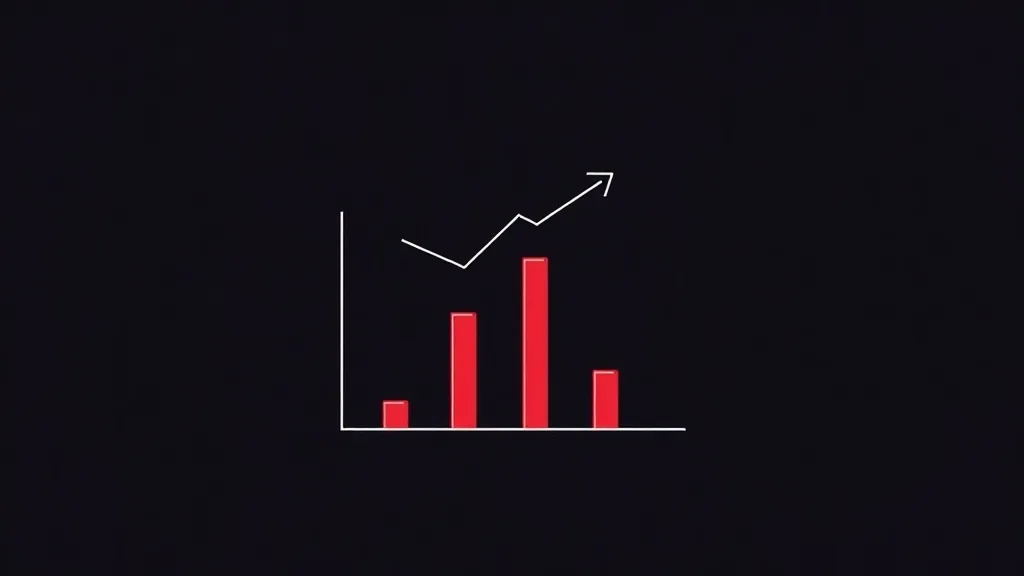
If your website receives 1,000 visitors a month and converts at 1%, you generate 10 leads. Lifting that rate to 3% gives you 30 leads from the exact same traffic. For most service businesses, that increase is the difference between a slow month and a fully booked calendar.
Because service purchases involve trust, expertise, and often a significant financial commitment, your website has to do more emotional and rational persuasion than a typical product page. Visitors need reassurance that you are credible, reliable, and the right choice before they reach out. Conversion optimization is how you provide that reassurance systematically.
Clarify Your Offer and Value Proposition
The most common reason service websites fail to convert is confusion. When a visitor lands on your homepage, they should understand within five seconds who you help, what you do, and why you are the right choice.
Start by sharpening your headline. Avoid vague statements like "We deliver excellence" or "Solutions for your business." Instead, state a specific outcome. For example, "We help accounting firms attract 20+ qualified leads every month" tells visitors exactly what they gain.
To strengthen your value proposition, address these questions clearly on your key pages:
- Who you serve: Name your ideal client so the right people feel understood.
- What problem you solve: Speak to the pain point that brought them to your site.
- What makes you different: Highlight your unique approach, guarantee, or experience.
- What happens next: Tell them the exact step to take.
When your message is clear and specific, visitors self-qualify. The right prospects lean in, and you waste less time on poor-fit inquiries.
Make Your Calls to Action Impossible to Miss
A call to action (CTA) is the moment where interest becomes action. Many service websites bury their CTA at the bottom of a page or use weak, generic wording like "Submit" or "Learn more."
To improve conversions, make your primary CTA prominent, repeated, and specific. Use action-oriented language that reflects the value the visitor receives, such as "Book Your Free Strategy Call" or "Request a Custom Quote." These phrases set expectations and reduce hesitation.
Consider these best practices:
- Place a clear CTA button in your header so it is always visible.
- Repeat the CTA after each major section of a long page.
- Use contrasting colors so the button stands out from the rest of the design.
- Limit each page to one primary action to avoid decision paralysis.
Also reduce the perceived commitment. "Get a free consultation" feels lower-risk than "Hire us today." Offering a small, valuable first step makes it easier for cautious prospects to raise their hand.
Build Trust With Social Proof and Credibility Signals
Because service buyers cannot inspect your work the way they inspect a physical product, trust becomes the deciding factor. Your website must actively prove that you are competent and dependable.
Social proof is one of the most powerful conversion tools available. Add these elements strategically throughout your site:
- Client testimonials: Use real names, photos, and specific results wherever possible. A quote like "They doubled our booking rate in three months" is far stronger than "Great to work with."
- Case studies: Show the before-and-after of real projects to demonstrate your process and outcomes.
- Logos of past clients: Recognizable brands instantly boost credibility.
- Reviews and ratings: Display star ratings from Google or industry platforms.
- Certifications and awards: Highlight credentials that reassure cautious buyers.
Place testimonials near your CTAs, not just on a separate page. When a visitor is about to take action, a nearby proof point removes last-minute doubt and encourages them to follow through.
Remove Friction From Forms and the Contact Process
Every extra field, unnecessary step, or moment of confusion reduces your conversion rate. Friction is the invisible barrier between an interested visitor and a completed inquiry.
Audit your contact and booking process honestly. Ask only for the information you truly need at the first step. A form with 10 fields will convert far worse than one with three. You can always gather more details during a follow-up call.
Use these tactics to reduce friction:
- Shorten forms to name, email, and one key question.
- Offer online scheduling so prospects can book instantly without back-and-forth emails.
- Provide multiple contact options, including a phone number, chat, and email for different preferences.
- Set expectations by stating your typical response time, such as "We reply within one business day."
The easier you make it to contact you, the more people will. Every point of friction you eliminate is a lead you keep.
Optimize Speed, Mobile Experience, and Design
Even the most persuasive message fails if your website is slow or difficult to use. Page speed and mobile usability directly affect both conversions and your visibility in search results.
Many service buyers browse on their phones, often during a quick search for local providers. If your site loads slowly or displays poorly on mobile, they leave and contact a competitor. Test your website on multiple devices and prioritize a clean, fast, mobile-first experience.
Focus on these fundamentals:
- Speed: Compress images, use reliable hosting, and minimize heavy scripts so pages load in under three seconds.
- Readability: Use clear fonts, generous spacing, and short paragraphs that are easy to scan.
- Visual hierarchy: Guide the eye toward your headline, key benefits, and CTA using layout and color.
- Simplicity: Remove clutter and distractions that pull attention away from your main goal.
Good design is not decoration — it is a conversion tool. A professional, effortless experience signals that you are equally professional in delivering your service.
Test, Measure, and Improve Continuously
Conversion rate optimization is not a one-time project. The strongest results come from ongoing testing and refinement based on real data rather than assumptions.
Start by tracking meaningful metrics. Use analytics to measure how visitors move through your site, where they drop off, and which pages generate the most inquiries. Set up conversion tracking so you know exactly which actions matter.
Once you have a baseline, run simple experiments:
- Test two different headlines to see which drives more inquiries.
- Compare a short form against a longer one.
- Try different CTA wording or button placement.
- Adjust the order of testimonials, benefits, and pricing information.
Change one element at a time so you know what caused any improvement. Over months, these incremental gains compound into a website that consistently outperforms your competitors.
Conclusion
For service businesses, your website is often the first and most important sales conversation you have with a potential client. When it is clear, trustworthy, and easy to use, it works around the clock to fill your pipeline with qualified leads.
The most effective conversion rate optimization strategies come down to a few principles: communicate a sharp value proposition, guide visitors with strong calls to action, prove your credibility with social proof, remove every point of friction, and deliver a fast, mobile-friendly experience. Then keep testing so you improve month after month.
You do not need more traffic to grow — you need to convert more of the visitors you already have. If you are ready to turn your website into a dependable lead-generation engine, our team at Beeglantee can help you design, build, and optimize a site that consistently attracts and converts your ideal clients.